A few months ago, a friend of mine asked me for a list of coping resources or advice I might be able to put together for one of her loved ones. Since then, a handful of other folks have asked me for the same information to support their own healing at home, and I have been toying with the idea of putting together a digital list that I can send to clients, family, and friends alike. Hence bringing this here blog back from beyond the veil.
I have been trying not to let my nervous system become too overloaded in the face of current world events — everything from political and environmental anxiety, on-going colonial violence on Indigenous land, illness and unrest the world over… Needless to say, we could all use a hand in staying grounded and present, and not falling into despair. Maybe now isn’t the best time to put even more information into your newsfeeds, but to heck with it.
If I haven’t lost you yet, buckle up folks — this is going to be a wordy one, full of practical grounding tools, techniques, and coping mechanisms that I not only use in my personal life, but also suggest to clients as well.
Alright, here we go.

What even is grounding, anyway?
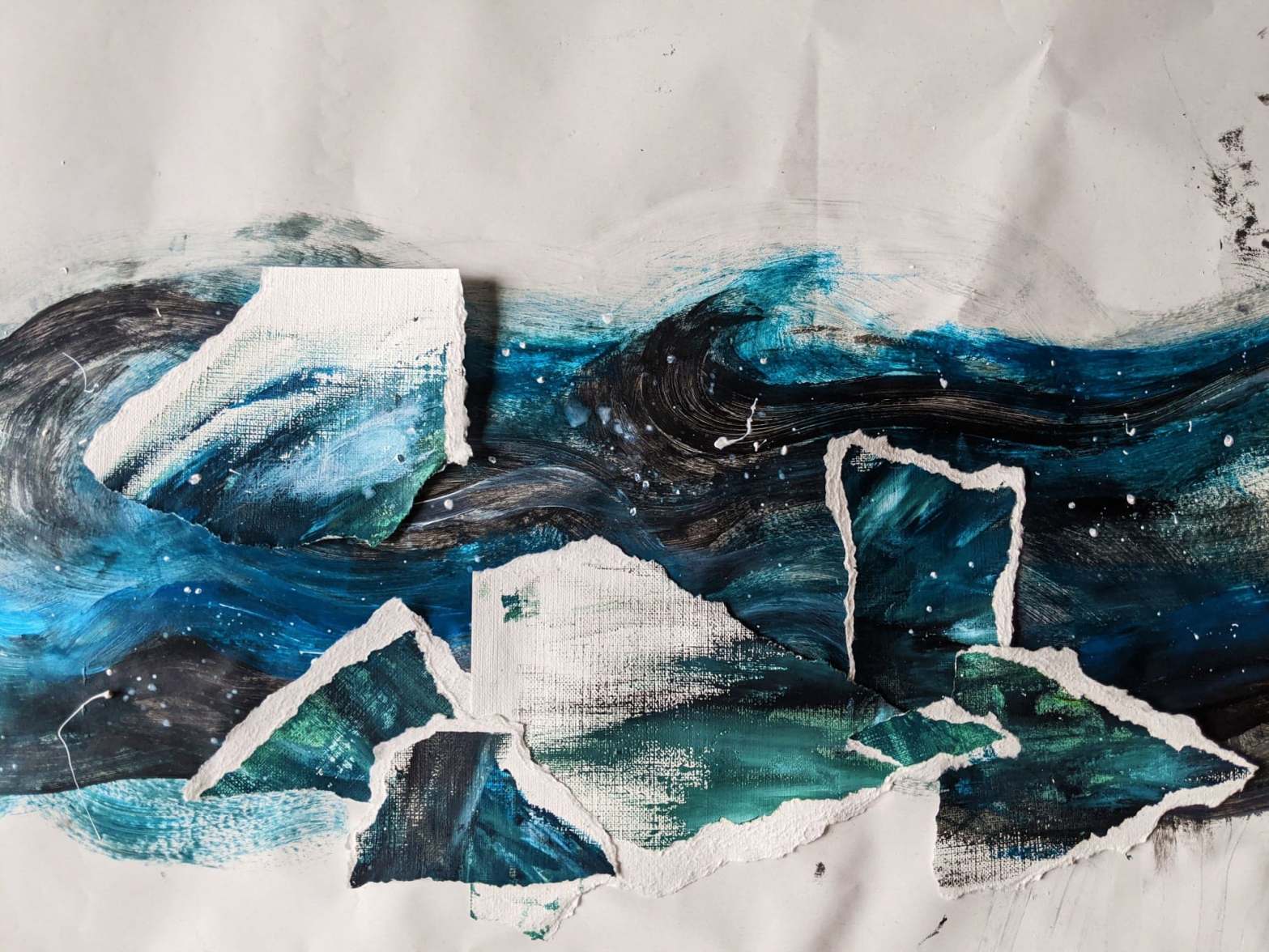
I am rooted but I flow – Virginia Woolf
Grounding, essentially, is an umbrella term used to describe any number of coping strategies which help to immediately connect you with the present moment. Because of this focus on the present, it can be associated with the practice of mindfulness. Many forms of grounding work by sending signals to your nervous system to come out of its vigilant, stressed out state and into a more relaxed state.
Some folks I have worked with have expressed concern that grounding means that they’re simply distancing from whatever it is that is causing them distress, rather than actually dealing with the thing itself. While yes, you can distance or distract yourself as a means of grounding, to me that isn’t the main goal of grounding.
For me, I find it useful to imagine a tree with deep roots versus a telephone pole during a storm. A rooted tree is able to shake and bend with the wind, while remaining firmly rooted to the ground — or present — and is actually stronger for being able to move like this. A telephone pole, on the other hand, is rigid and upright, and is more likely to get knocked over.
Grounding does not mean that everything is okay, but that you are better able to weather the storm. It is a means of coming back to yourself so that you can deal with what needs to be dealt with, rather than spiral in panic or dissociate. Grounding means you are rooted, but you flow.
The very basics
Questions to ask yourself when feeling overwhelmed
▴ When was the last time I ate something nourishing?
▴ When was the last time I had something to drink?
▴ When was the last time I went outside?
▴ Have I moved my body for fun lately?
▴ When was the last time I had a nourishing conversation with a loved one, or connected socially?
▴ Have I taken my medication today?
Getting started
A few quick and easy grounding resources that you can access just about anywhere, for when you’re right in the midst of it
▴ Grounding through the senses: 5-4-3-2-1 exercise
A classic grounding exercise, if you ask me, it works by gently forcing yourself back into the present moment. You work through each of your senses, noticing things in your immediate surrounding and naming them one by one. For example, five things that you can see… four things that you can hear… and so on. You can also modify based on your body; for instance, I don’t have a very good sense of smell, so I usually only notice one or two smells in my immediate environment.
▴ 5-2-7, or diaphragmatic breathing
Also called box breathing, belly breathing, or balloon breathe, this is a simple breath work exercise you can access anywhere you take your lungs. Begin by breathing in through your nose for a count of five seconds. As you breathe in, expand your stomach outwards — you can imagine your stomach expanding like a balloon here. At the top of your breath, hold for a count of two seconds. Then, exhale through the mouth (bonus points if you do it audibly!) while contracting your stomach inwards. Here, you can imagine a deflating balloon. Repeat at least three times, probably more, and adjust what deep breathing means to you based on how your body feels.
▴ Progressive muscle relaxation
It is basically what it sounds like: slowly, progressively moving through each muscle group and tensing and relaxing them in turn. I find it useful to start from the ground up. Begin by tensing and squeezing the muscles in your feet, holding for a count of three or more seconds, and slowly releasing your muscles. After the feet, try the calf muscles, then the thighs, and so on until you reach your face and head. This one is nice because often, even if you are at work or on a bus, no one knows what you are doing. At best, it is goes completely unnoticed. At worst, the people around you assume you are stretching.
▴ Ice packs on the back of the neck
If at home or somewhere you have access to an ice pack or other cold, frozen object, place it at the nape of your neck. Like a lot of things on this list so far, this sends signals to your brain to begin to calm down, rest and digest. I’ve used handfuls of snow when no other option was available, as well!
▴ Stomp or shake it out
I usually pair this with one of the above breathing and body exercises. Make like Taylor Swift and shake it out, my friend.
▴ A mindful beverage or snack
This works as a lovely ritual throughout the day to keep you grounded. When having a beverage or snack, try to focus on each sensation as it arises. Notice the colour of the item, the temperature in your hands as well as your mouth, the flavours, the smell…
▴ Carry a grounding stone, or other object
Similar to the mindful beverage mentioned above, carry a grounding stone, crystal, or other object with you in your pocket or bag. When feeling anxious or otherwise activated, you can pull out your grounding object and simply notice it: notice what colour it is, how it feels in your hand, how it catches the light… Like the above exercise, it is a great way to pull yourself back into the present via noticing. Examples of grounding objects can be jewelry, stones, shells, an essential oil… basically anything and everything that you can carry discretely on you at all times!
▴ Self-holding
One posture that is super comforting to the nervous system, is self-holding. Essentially, you take opposite hands under opposite armpits, like you are giving yourself a hug. You can pair this with many of the exercises listed above, particularly the 5-4-3-2-1 and breath work. If you have access to them, consider also wrapping yourself in a fuzzy blanket or comforting clothes, and getting a hot water bottle or heating pad. You can also cuddle a consenting person or animal for a similar effect (try for at least thirty seconds — it will send signals to stop the production of cortisol, a stress hormone).
▴ Child’s pose
Okay so technically you cannot do this absolutely everywhere, but if you are at work, home, or another safe place you can head into the child’s pose. Remember to breathe deep and long, whatever that looks like for your body.
▴ Get into nature
If you’re present enough to safely take a stroll, get outside into nature. Hug a tree! Pick up a rock! Smell a flower! Plant something! There is lots of evidence — particularly in nature-relatedness and positive psychology — that points to an increase in overall well-being the more time we spend in nature, and the more connected we feel to it.
Art making and visualization
Directives and exercises for grounding through imagery
▴ Contemplative photography
Take a photo of the first thing you notice in your environment. It doesn’t have to be a perfect photo, the goal is to draw your attention back to the present and really notice and see what is in front of you.
▴ Imagine your boundary / Crystal dome directive
Visualize or create through arts materials a boundary surrounding yourself, protecting you. One of my supervisors encouraged me to envision a crystal dome surrounding myself. This dome lets only light and love in, and all of the so-called negative emotions flow over it like water. You can simply visualize this, or create it with arts materials as well. If creating one with arts materials, I suggest also adding an affirmation or statement of trust with it, and writing it on the page. My go to affirmation of trust is, I trust that the universe holds us all in love. I also love the Virginia Woolf quote at the top of the page.
▴ Containment visualization
Settle into the space around you, and feel your feet and body supported by the earth. Begin to deepen your breath, and as you feel ready, imagine yourself in a safe space. It can be your home, a beach, a forest, a coffee shop… wherever you feel safe. Next begin to imagine a container of some kind — a box, an envelope, a trunk… it can be anything. Trust that your container is big enough to hold all that it needs to, and begin to envision placing all of the thoughts, worries, and feelings you do not want to carry with you right now into the container. Continue to breathe, low and slow. When you are finished placing things into your container, imagine placing it at some safe distance from yourself: you can place it on a shelf in a closet, you can bury it, place it on a boat out to sea… whatever feels right, and safe. Remember you can return to this container whenever you want, either to add to it or to look at the individual things within it.
▴ Heart map / Body map
Turn your attention inward, and create a visual map of your heart or body and the sensations and emotions it is experiencing.
▴ Draw your breath
▴ Animal and environment directive
Working with art materials, create an animal and a safe, loving environment with it. Imagine what the animal needs to feel safe, to survive, as well as what it needs to feel comforted, loved, supported, and like it can thrive.
▴ Cleansing rituals — from your cultural background
No, not sage smudging or palo santo — the obvious exception being if those are indigenous rituals to your people. You can cleanse your space and energy without resorting to cultural appropriation, with a little bit of knowledge or intuition. Burning of various herbal plants is indigenous to many peoples the world over, for example, and with a little bit of research you can learn which ones you ancestors worked with. You can also use smoke (by lighting a candle and blowing it out, or safely burning a match), sound (ringing bells, playing music), or salt (bathing your sacred objects in it, sprinkling it on your space, or by soaking in Epsom salts). Scent is another great way to cleanse and ground. Whichever way feels best for you, imagine yourself and your space being cleansed of other peoples emotions, feelings, or expectations. Imagine yourself and your space being cleansed of the fear and despair of the world. Imagine yourself coming back home to yourself.
▴ Write yourself a love letter or letter of encouragement
Write it in the third person, as though you were addressing a loved one in need of a pick me up. Read it often, read it aloud.
Needs no introduction
Rapid fire list of grounding skills, which may need no explanation
▴ Heart opening yoga
▴ Yoga for After a Disaster — my ultimate go to for grounding yoga
▴ Meditation — I am a fan of Tara Brach
▴ Walking meditation — like regular meditation, but moving
▴ Oracle/tarot or prayer
▴ Do one small task you have been putting off
▴ Mindful baking or cooking — its methodical and creative!
▴ Text or call a loved one
▴ Music to support your nervous system — this and this are my playlists
▴ Limit screen time, set reminders and timers if needed
▴ Turn off notifications, or hide them from your lockscreen
▴ Limit the amount of information you take in — this means news, youtube, reading, and so on
▴ Set an appointment with your doctor or health care provider
▴ Put on an uplifting podcast — one, two, three options
▴ Read something light — one of my supervisors once chastised me for reading suspenseful science-fiction while working in harm-reduction
▴ Care for your plants or pets
▴ Get moving in some way, shape, or form
▴ Journalling
Other resources
Folks whose work I love, and recommend
▴ alex elle
▴ Lisa Oliveria
▴ On Being in Your Body
▴ Soft Path Healing
▴ marlee grace
▴ Ariel Meadow Stallings – both marlee grace and AMS have great resources on starting a devotional dance practice for grounding
 Cairn Counselling & Art Therapy